



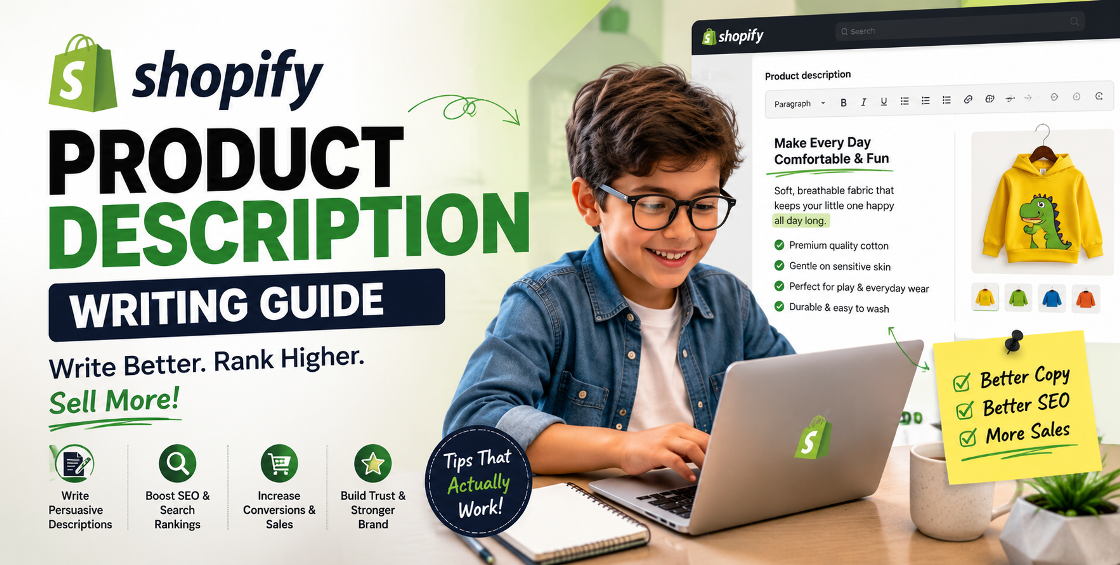
Running a Shopify store isn't just about uploading products and hoping customers will buy. We've worked with merchants managing everything from 50 products to catalogs with over 100,000 SKUs, and one challenge comes up repeatedly—product descriptions are often treated as an afterthought.
It's easy to import products through CSV files, sync inventory, organize collections, and configure variants. But when every product description sounds identical or only lists technical specifications, conversions usually suffer.
A well-written product description does more than fill a blank field inside Shopify. It answers customer questions, improves search visibility, builds confidence, and helps shoppers decide faster.
In this Shopify Product Description Writing Guide, we'll share practical strategies we've seen work across fashion, electronics, home décor, beauty, industrial products, and B2B catalogs—without relying on sales hype or keyword stuffing.
Many ecommerce businesses invest heavily in paid advertising but overlook the product page itself.
When visitors finally land on a product page, they're asking questions like:
Your product description should answer these questions naturally.
Strong descriptions also help:
Even stores with excellent product photography often underperform because the written content doesn't provide enough confidence for buyers.
Instead of writing long paragraphs full of marketing buzzwords, use a structure that's easy to scan.
Avoid opening with product specifications.
Instead, explain what the product actually helps customers accomplish.
Instead of:
"Premium stainless steel insulated bottle with BPA-free construction."
Try:
"Keep your drinks cold throughout long workdays, road trips, or outdoor adventures without worrying about leaks."
The second version immediately connects with a real situation.
Features describe the product, while benefits explain why those features matter.
Example:
Feature: Waterproof material
Benefit: Keeps your belongings dry during unexpected rain or outdoor activities.
Customers don't buy features—they buy outcomes.
Large walls of text can overwhelm shoppers.
A cleaner format includes:
A short paragraph introducing the product.
Include information like:
If applicable, explain how customers should clean, maintain, or store the product.
Every product category has common concerns.
Examples include:
Including these answers inside the description can reduce unnecessary support tickets.
Search engines have become much better at understanding natural language.
Instead of repeating the same keyword dozens of times, focus on writing genuinely helpful content.
For example, if your primary keyword is Shopify Product Description Writing Guide, naturally include related phrases such as:
This creates content that's easier for both readers and search engines to understand.
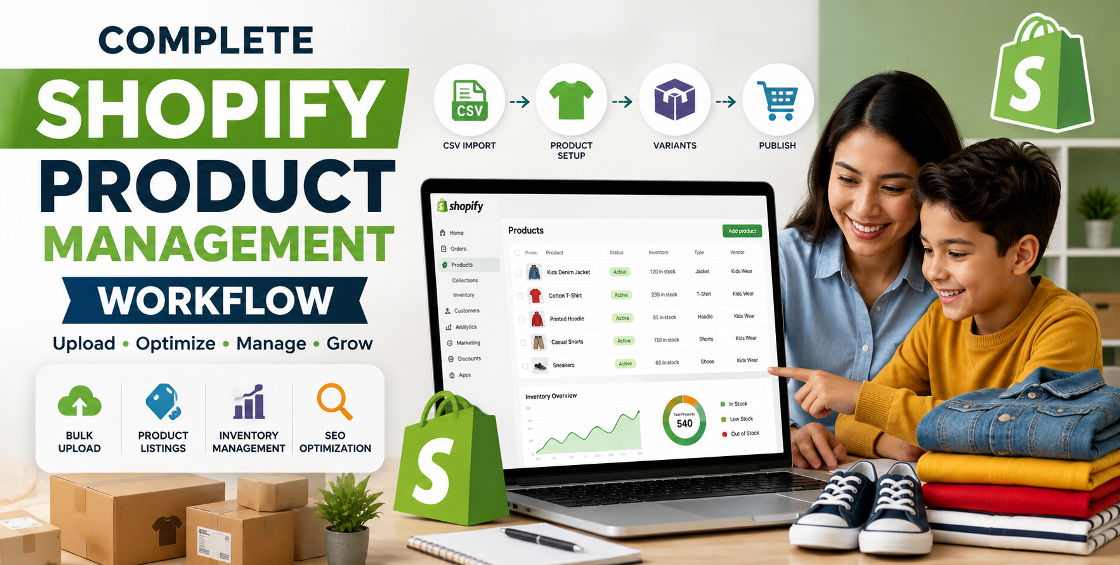
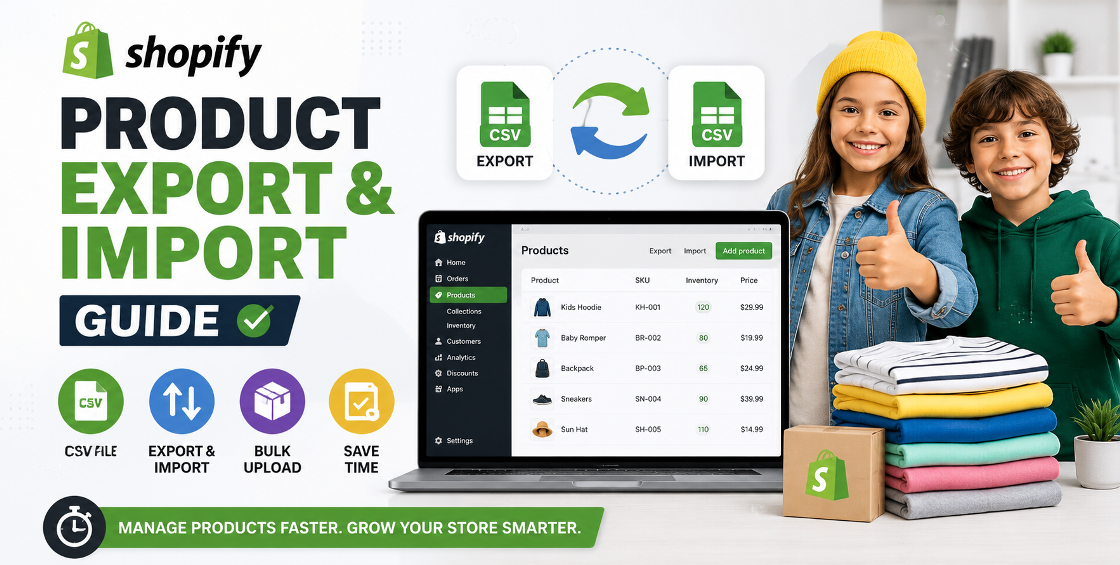
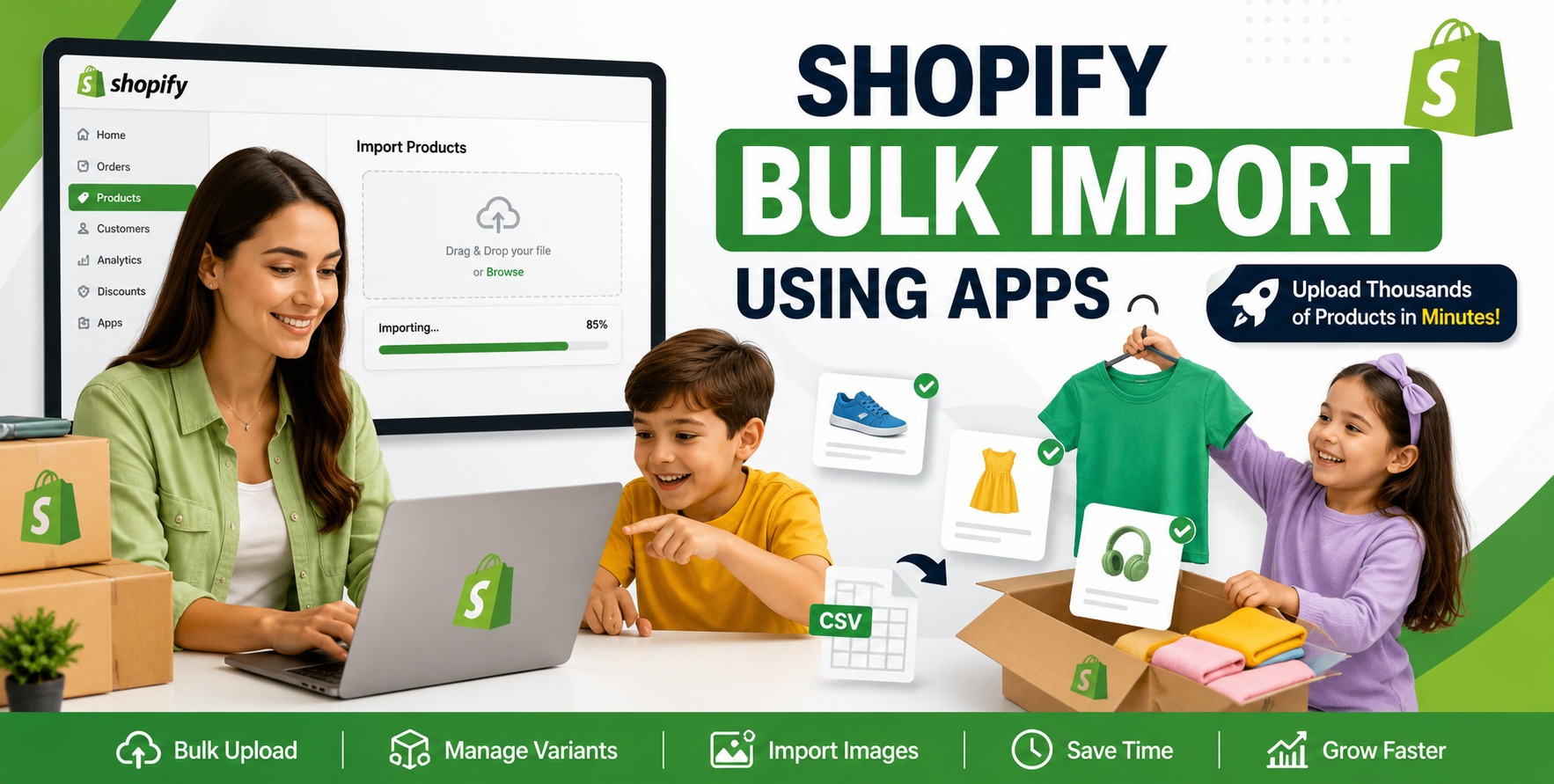
Many Shopify merchants upload products using CSV imports.
One common issue we've seen is that beautifully formatted descriptions inside spreadsheets lose their structure after import because HTML tags weren't prepared correctly.
Before importing products:
A few extra minutes during upload can significantly improve the customer experience.
After handling thousands of product uploads, we've noticed several recurring issues.
Many stores duplicate the same description across every product variant.
While color variants usually don't need unique copy, products with different materials, functions, or target users should have distinct descriptions.
This improves relevance and can help avoid duplicate content across indexed pages.
Large imports sometimes include hidden formatting copied from Word documents.
This may create:
Always clean descriptions before importing.
If one product uses bold headings, another uses numbered lists, and another uses plain paragraphs, the store begins to feel inconsistent.
Create a formatting template before writing descriptions at scale.
Even the best description won't perform well if images are poor.
Make sure product pages include:
Copy and visuals should work together.
Here are practical lessons we've learned from real Shopify projects.
SEO matters, but conversions matter more.
If the copy sounds unnatural, customers notice.
Luxury brands shouldn't sound like discount retailers.
Likewise, industrial suppliers shouldn't write like fashion brands.
Keep tone consistent across the catalog.
Many suppliers provide ready-made descriptions.
The problem? Hundreds of other websites publish the exact same text.
Original descriptions give your store a better chance of ranking while creating a stronger brand identity.
If appropriate, guide shoppers toward related resources such as:
These internal links help users discover more content and can strengthen your site's SEO structure.
Specifications are useful, but they shouldn't replace persuasive copy.
Explain why each specification matters.
Most ecommerce traffic now comes from mobile devices.
Copying competitor websites or manufacturer descriptions rarely delivers long-term SEO results.
Original content consistently performs better.
Repeatedly inserting the same keyword makes descriptions difficult to read.
Search engines now prioritize helpful, natural language.
Every product page should gently encourage the next step.
Simple prompts often outperform aggressive sales language.
You don't need to reinvent the process for every product.
Follow this structure:
This format works across most ecommerce industries while remaining easy to scale.
Writing product descriptions isn't just a content task—it's part of your sales strategy.
Every description should help shoppers understand the product, answer common questions, and feel confident enough to purchase.
Whether you're launching a new Shopify store or managing thousands of products through bulk imports, investing time in high-quality product descriptions pays off through better visibility, stronger engagement, and improved conversion rates.
The goal isn't to write more. It's to write with clarity, purpose, and the customer in mind.
Our Trusted Clients
















Our goal is to help our companies maintain achieve best class positions their respective industries & our team works occur that pleasures have to be repudiated.

Copyright © MyShopifyExpert . All rights reserved.